Against the backdrop of fierce competition in the antibody drug arena, druggability challenges have become the core bottleneck of novel antibody development. Conventional antibody discovery largely relies on random screening that only prioritizes antigen binding affinity, while frequently overlooking intrinsic druggability flaws such as high aggregation propensity, poor stability, low solubility and unfavorable process compatibility. Many promising candidate molecules stall at CMC development and clinical stages, extending R&D timelines, inflating costs and causing numerous high-value target programs to fail mid-stream.
Great Bay Bio has independently developed AlfaBodY, an intelligent molecular design platform powered by proprietary protein structure-based AI antibody design algorithms. It revolutionizes traditional R&D workflows by enabling de novo optimized antibody molecular design at the source, efficiently generating high-affinity, druggable and safe lead antibodies to address critical industry pain points.
▲ Intelligent Molecular Design Platform (AlfaBodY)
Technical Advantages: Deliver PCC+ in 8 Months and Tackle Hard-to-Drug Targets
Built upon protein structural information, AlfaBodY features a next-generation AI antibody design algorithm. Unlike conventional sequence screening workflows, it takes input variable region sequences and performs end-to-end de novo design of full-length antibody sequences encompassing framework regions and complementarity-determining regions (CDRs), enabling comprehensive optimization of antibody molecules.
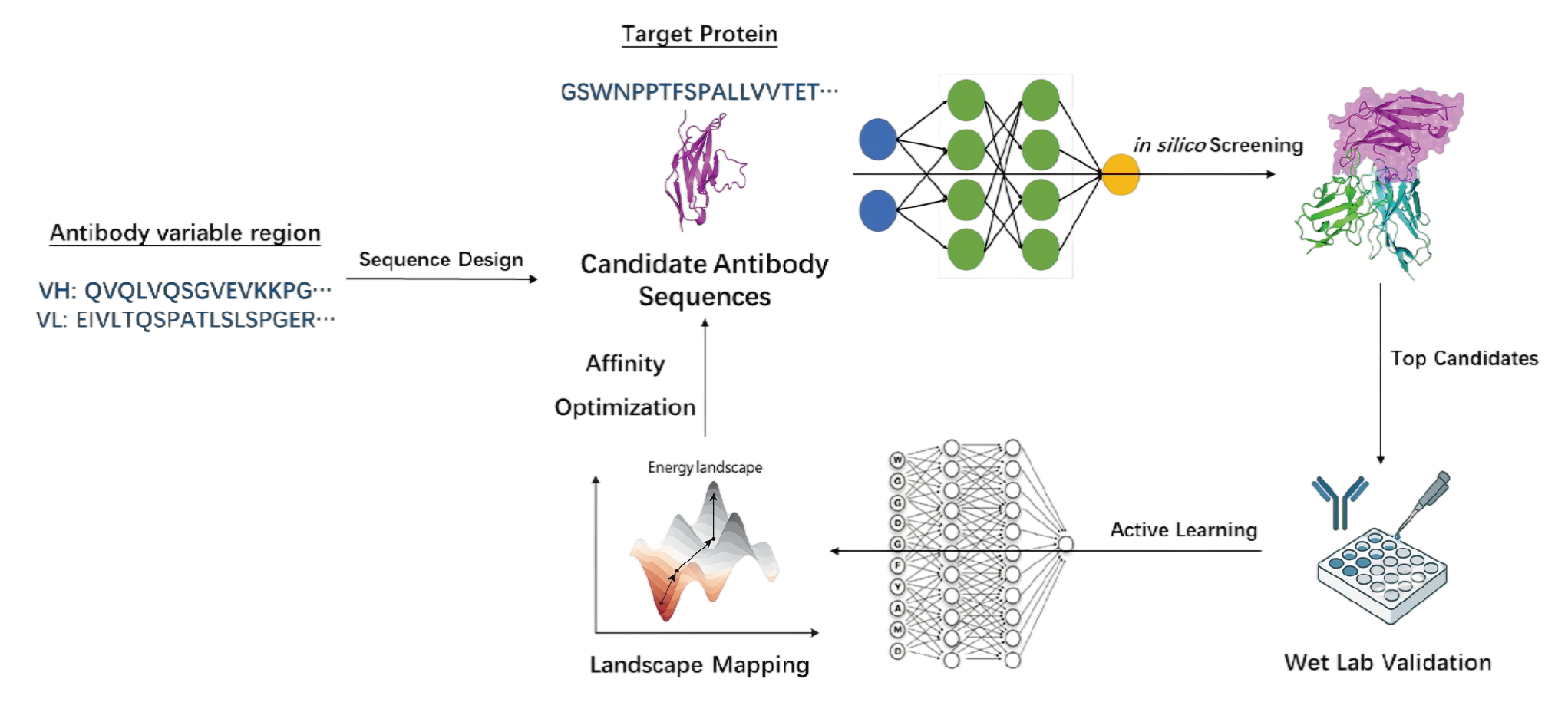
▲ AI-powered molecular design workflow on AlfaBodY
The platform shifts druggability assessment forward to the molecular design phase, eliminating the classic pitfall of "screen first, validate later, discover fatal defects late-stage". After only 3–5 rounds of streamlined wet-dry experimental iterations, users can obtain antibodies with marked structural divergence from the template and comprehensively improved overall performance, featuring three core strengths: superior binding affinity, enhanced druggability and potent pharmacological activity, which fundamentally mitigate downstream R&D risks.
AlfaBodY adopts a streamlined closed-loop wet-dry iteration system with a single iteration cycle of merely 3 weeks, delivering industry-leading screening efficiency. Instead of screening massive sequence libraries, high-quality candidate molecules can be identified from fewer than 300 sequences, significantly cutting experimental expenses and R&D lead time.
Rapid Generation of PCC+ Candidates Within 8 Months
Leveraging the 3-week-per-cycle high-speed closed-loop AI design system, AlfaBodY drastically streamlines and accelerates the entire R&D workflow. The platform completes full in vitro and in vivo validation within 8 months to reliably deliver high-quality preclinical candidate PCC+ molecules. Valuable leads can be retrieved from a pool of under 300 sequences, slashing timelines and doubling productivity compared with traditional discovery pipelines.
Furthermore, candidate antibodies designed by the platform precisely recapitulate the functional epitopes of well-characterized validated template antibodies. While retaining potent efficacy, this strategy substantially reduces clinical uncertainty, creates the potential to skip Phase II clinical trials, drastically shortens overall clinical development timelines, accelerates drug-to-market progression and secures first-mover market advantages.
Conquer Hard-to-Drug Targets
In conventional R&D, druggability shortcomings including instability, aggregation tendency and poor solubility are often uncovered late during CMC process development, triggering costly program rework or outright termination.
At the early molecular design stage, AlfaBodY integrates druggability prediction models to proactively mitigate core CMC risks, pre-empting obstacles in downstream process development, formulation manufacturing and scale-up production, and improving molecular developability from the very beginning. The platform also delivers complete, regulatory-compliant datasets covering in vitro characterization, in vivo pharmacodynamic results, and stable cell line construction & validation data that satisfy clinical filing requirements, providing robust support for pipeline regulatory submissions.
Candidate antibodies generated on the platform share highly consistent epitopes with clinically validated reference templates, effectively lowering clinical safety risks and markedly boosting the success rate of novel drug development, making the platform ideally suited for antibody discovery against all types of hard-to-drug targets.
Innovative Value: Redefine Antibody Discovery Logic to Empower High-Quality Novel Drug Innovation
Centered on three core pillars — AI-driven de novo molecular design, front-loaded druggability optimization and full-lifecycle risk control — AlfaBodY upends the inefficient random screening paradigm of traditional antibody drug R&D and builds differentiated competitive edges. It shifts the industry focus from "can we generate an antibody" to "can we generate a developable, marketable high-performance antibody".
By mitigating multiple risks across CMC development and clinical research at the molecular design stage, the platform enables biopharma enterprises to conquer hard-to-drug targets and rapidly advance premium antibody pipelines with lower costs, shorter timelines and higher success rates, injecting new momentum into innovative antibody drug research and development.
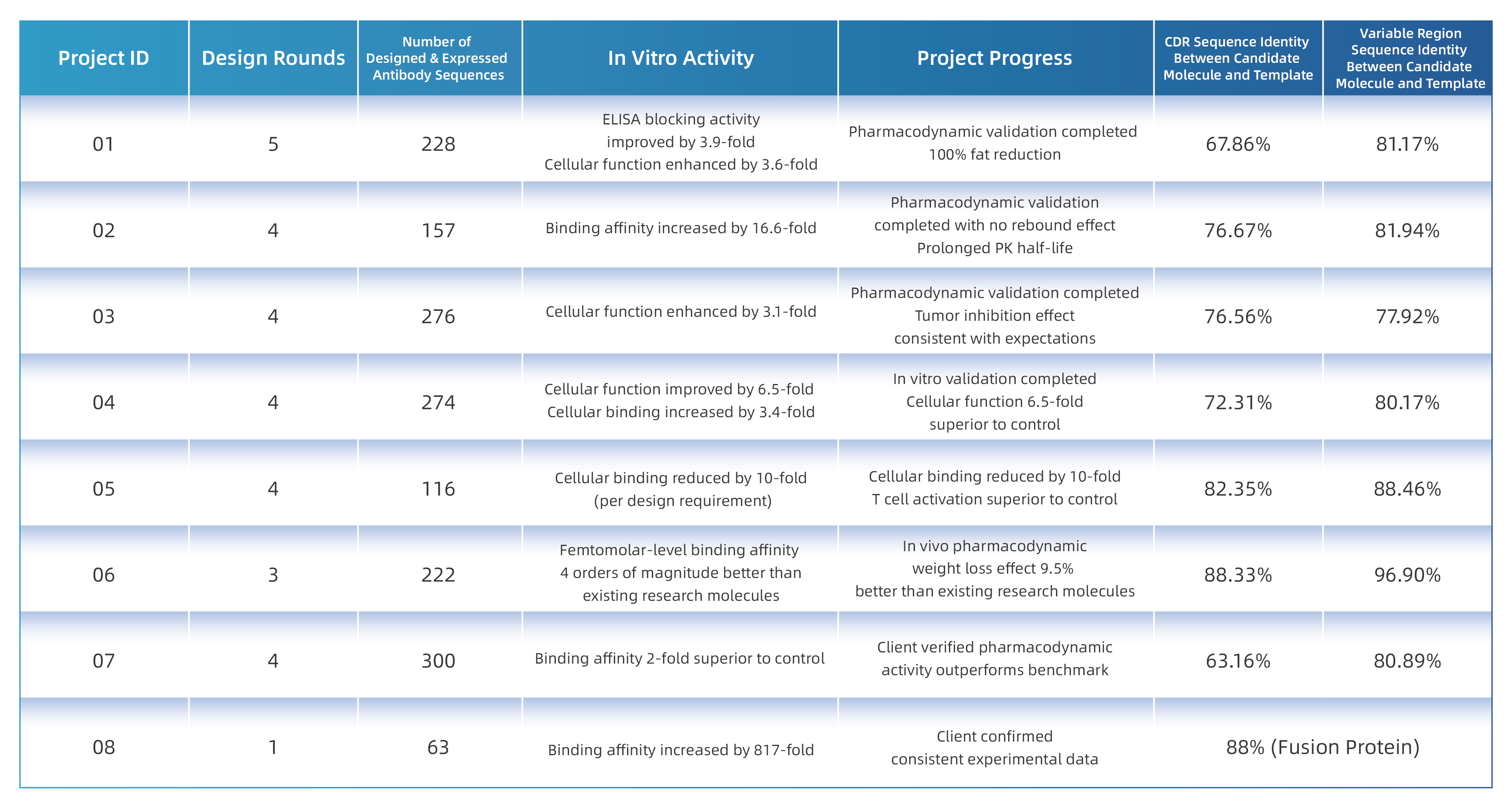
▲ AlfaBodY has supported diverse clients to overcome hard-to-drug targets and generate superior PCC molecules
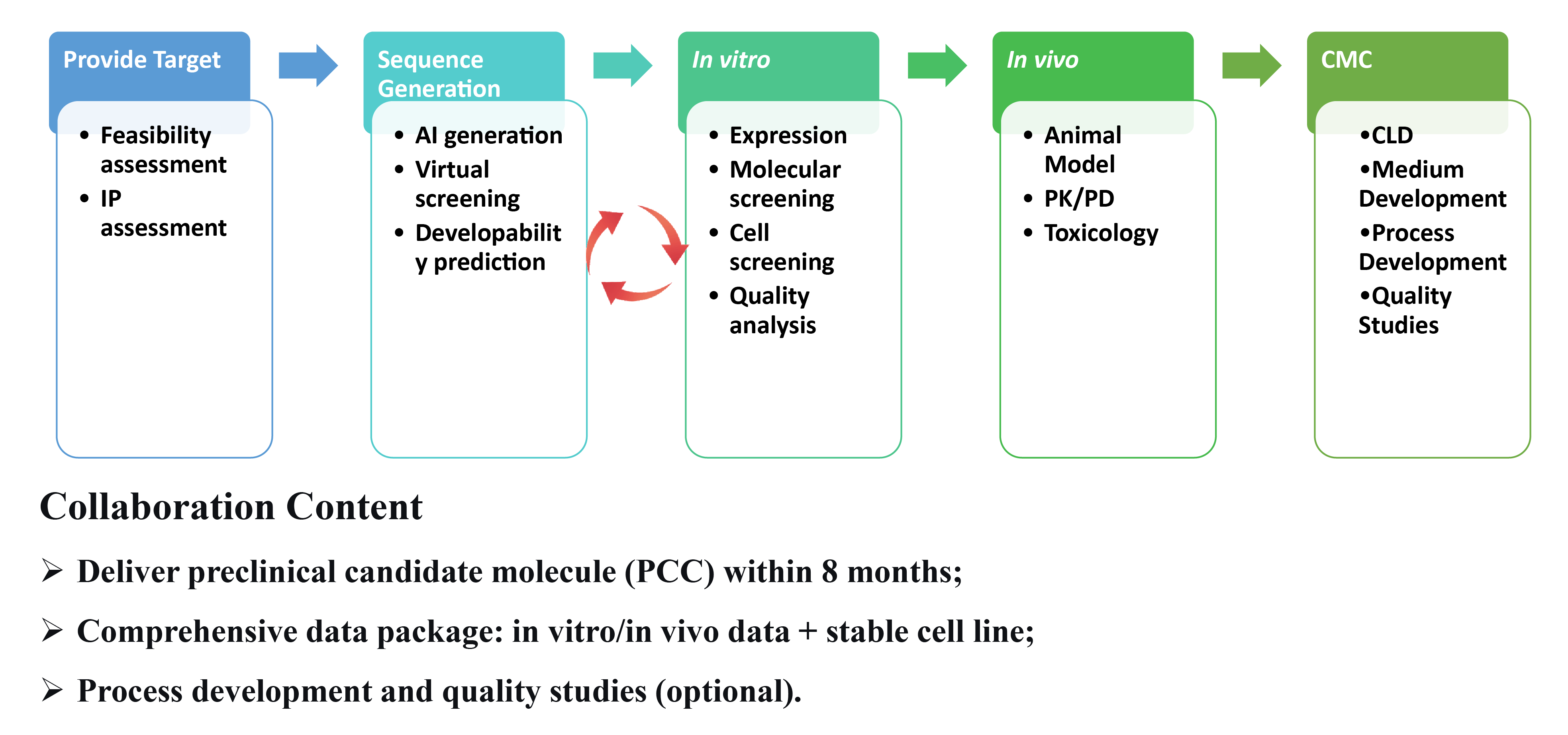
▲ AlfaBodY provides a full suite of value-added services
AlfaBodY achieves deep synergy with Great Bay Bio’s other intelligent platforms including AlfaDAX, AlfaCell and AlfaMedX, collectively forming an integrated benchmark PCC Prime Foundry for intelligent molecular manufacturing. It empowers clients to generate PCC molecules with excellent druggability and high-yield stable cell lines within 8 months, delivering comprehensive support for efficient, high-quality novel antibody discovery worldwide.