GLP-1-based weight-loss drugs have transformed obesity treatment worldwide, yet clinical challenges remain, including muscle loss and weight regain after treatment discontinuation. The ActRIIA/B signaling pathway represents a key therapeutic target for achieving fat loss while preserving lean body mass. However, conventional antibody development faces two major bottlenecks: first, an overemphasis on binding affinity can lead to the “high-affinity, low-cellular-blocking-activity” trap; second, improvements in molecular activity often come at the expense of developability, with liabilities such as aggregation and high viscosity making it difficult to balance potency and manufacturability.
Great Bay Bio’s AI-powered molecular assessment and sequence optimization platform, AlfaDAX, moves beyond single-parameter optimization. Using cellular signaling blockade as its primary functional endpoint, AlfaDAX integrates AI-based predictions across multiple dimensions, including binding affinity, aggregation propensity, immunogenicity, and nonspecific binding. The platform has supported the end-to-end development of AB130-165, a lead molecule from the AB130 pipeline in a collaborative client project targeting ActRII.
The associated study, “AlfaDAX-Derived ActRIIA/B Antibody with Semaglutide Enhances Fat Loss and Improves Weight-Loss Quality in DIO Mice,” has been published as a preprint on bioRxiv, an international preprint server for life sciences research. The paper details how AlfaDAX addresses key challenges in ActRII antibody development and demonstrates an integrated optimization workflow spanning computational design, multi-layer in vitro validation, and in vivo efficacy evaluation.
AlfaDAX research findings published on bioRxiv, an international life sciences preprint server.
Case Study: End-to-End Development of the ActRII Antibody AB130-165
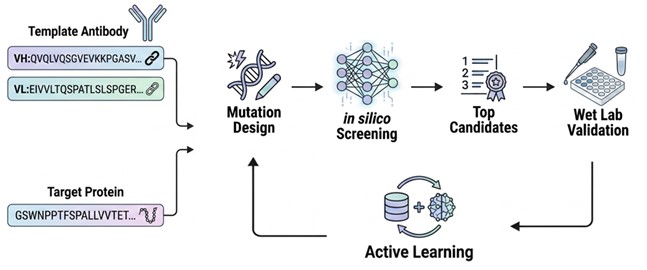
Powered by AI, AlfaDAX guided the AB130 pipeline through template engineering, computational screening, multi-layer in vitro validation, and animal efficacy studies, establishing a new development paradigm centered on function-first design and simultaneous multi-parameter optimization.
AlfaDAX iterative optimization workflow
1. Three Rounds of AI-Driven Engineering Focused on Functional Potency
Starting from the parental Bimagrumab sequence, AlfaDAX conducted three rounds of computational screening by combining structure-guided site-directed mutagenesis with AI-based multi-objective scoring.
- Function-focused prediction: Simultaneously evaluated antibody–antigen binding free energy, epitope occupancy, and potential cellular signaling blockade, avoiding indiscriminate increases in binding affinity.
- Early developability risk assessment: Screened for aggregation, viscosity, T-cell activation, and off-target binding risks to eliminate variants with potential developability liabilities before experimental validation.
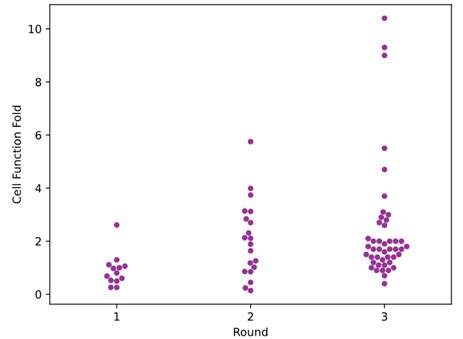
- Progressive potency improvement: Through iterative optimization, the third round identified AB130-165 as the lead molecule, achieving a 9.6-fold improvement in cellular blocking activity over Bimagrumab.
Functional potency improvement across three optimization rounds
2. Overcoming the Affinity Bottleneck Without Falling into the High-Affinity Trap
Surface plasmon resonance (SPR) measurements confirmed that AB130-165 achieved ultrahigh, picomolar-range binding affinity:
- ActRIIA: (K_D = 0.204) pM, representing a 1,054-fold improvement over Bimagrumab.
- ActRIIB: (K_D = 0.243) pM, representing a 10-fold improvement over Bimagrumab.
Notably, another variant from the same screening campaign, AB130-188, exhibited even higher binding affinity but weaker cellular blocking activity than AB130-165. AB130-188 achieved an ActRIIA (K_D) of 8.49 fM, a 25,000-fold improvement, and an ActRIIB (K_D) of 1.08 fM, a 2,300-fold improvement, relative to Bimagrumab.
These results reinforce a central principle behind AlfaDAX’s optimization strategy: binding affinity has an optimal range, while functional activity is critical to therapeutic efficacy. By identifying the balance between affinity and function, AlfaDAX helps avoid unnecessary engineering toward ultrahigh affinity that does not translate into improved cellular activity.
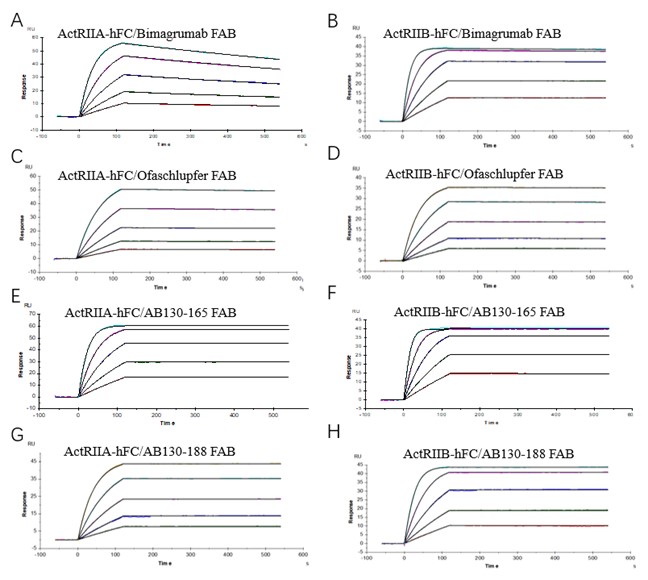
Comparison of SPR binding affinity sensorgrams
3. Integrated Developability Prediction to Minimize CMC Rework
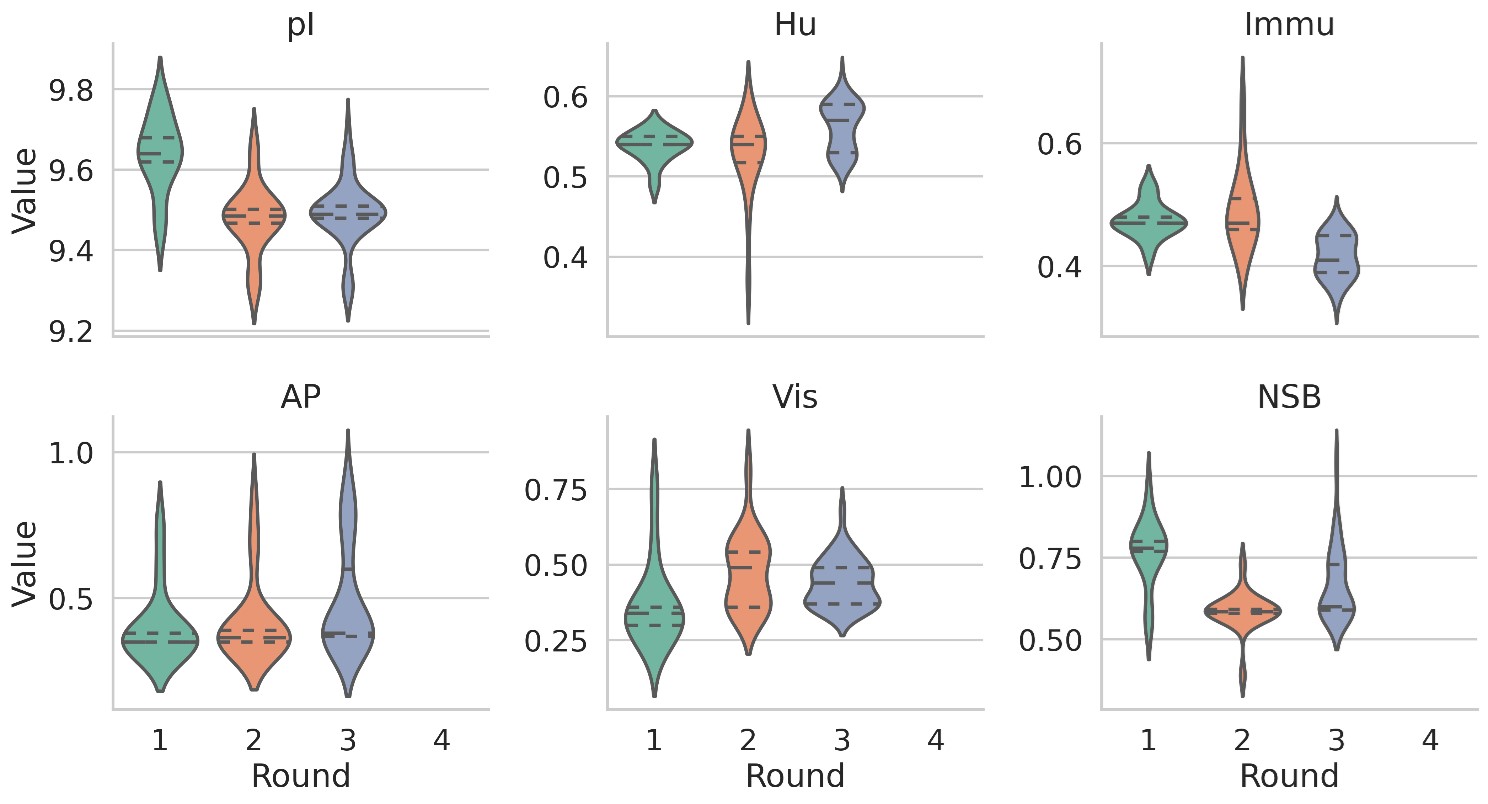
AlfaDAX incorporates a comprehensive AI-based developability scoring framework that simultaneously assesses six dimensions: isoelectric point (pI), humanization, immunogenicity, aggregation propensity (AP), viscosity (Vis), and nonspecific binding (NSB). Under the platform’s scoring criteria, values of ≤1 fall within the defined safety range.
AB130-165 demonstrated a favorable developability profile:
- Low immunogenicity risk: AI-based assessment indicated very low immunogenicity risk, while off-target binding to HEK293 cells was substantially lower than that of Bimagrumab.
- High purity and thermal stability: Size-exclusion chromatography (SEC) showed 97.17% monomer purity, and thermal stability measurements (Tm/Tagg) exceeded 66°C, with no apparent aggregation liability indicated by these results.
- Strong expression performance: Transient expression in CHO cells reached 312 mg/L.
- Potential suitability for subcutaneous formulation: Its physicochemical profile supports further development toward high-concentration, long-acting subcutaneous formulations, potentially addressing the limitations associated with Bimagrumab’s intravenous administration.
By incorporating developability assessment early in the design process, AlfaDAX helps identify potential CMC liabilities before they become costly downstream challenges.
Developability profiles across three rounds of iterative optimization
4. Multi-Level In Vitro Validation Demonstrates Potent Dual-Receptor Blockade
AlfaDAX-guided validation separately assessed the inhibitory activity of AB130-165 against ActRIIA- and ActRIIB-mediated signaling.
1. Cells co-expressing both receptors: AB130-165 inhibited Activin A–SMAD signaling with an IC50 of just 0.03004 nM, approximately 9.6-fold more potent than Bimagrumab.
2. ActRIIA-knockout cells: AB130-165 demonstrated a clear advantage, highlighting the improvement in ActRIIA pathway blockade.
3. ActRIIB-knockout cells: Its activity was comparable to that of the benchmark molecule, supporting balanced, potent inhibition across both receptor pathways.
Together, these results demonstrate that AlfaDAX can help optimize receptor-specific functional activity rather than relying on binding affinity alone.
5. Animal Studies Demonstrate Differentiated Benefits in Fat Loss and Muscle Preservation
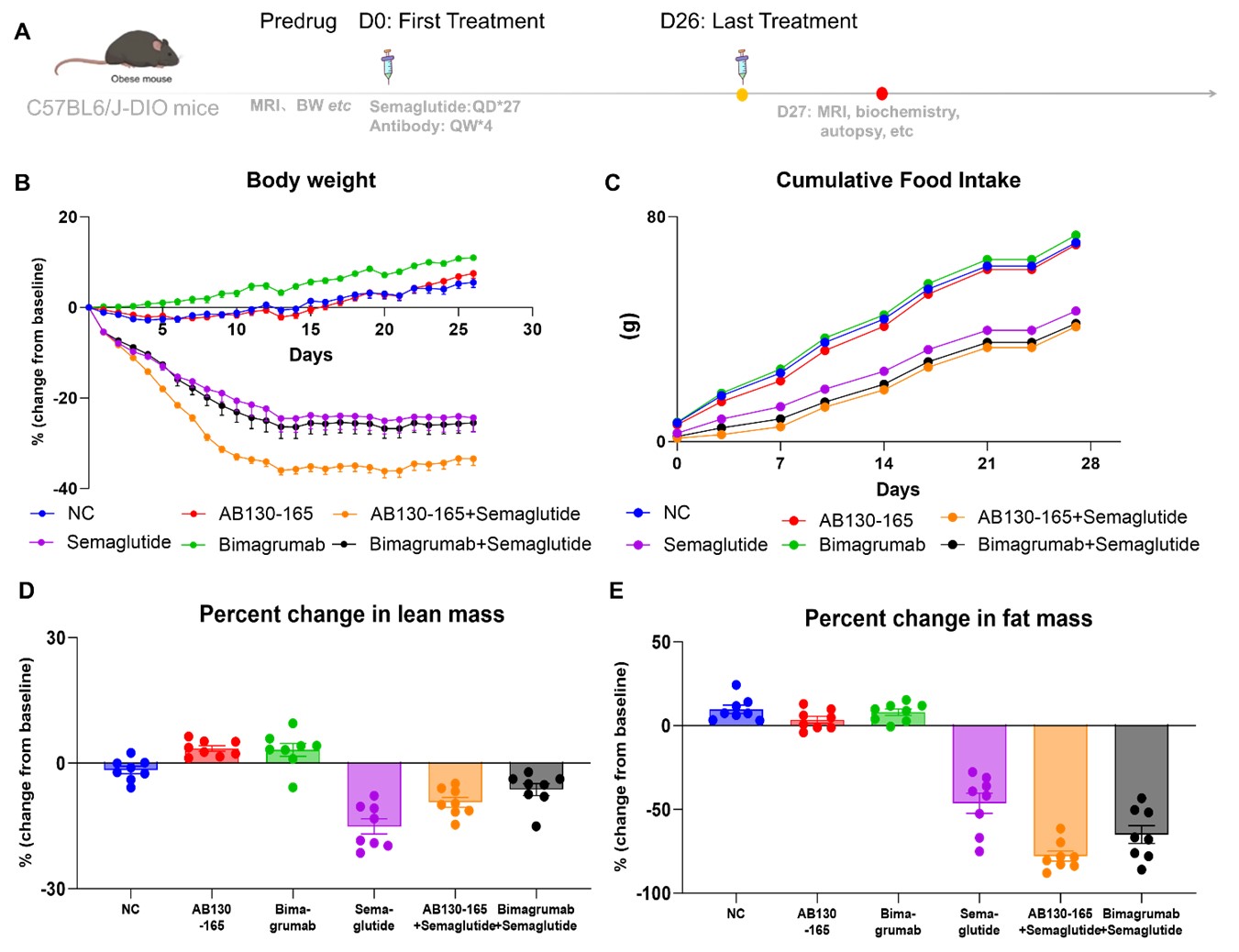
In a preclinical diet-induced obesity (DIO) mouse model, AB130-165 combined with semaglutide demonstrated differentiated metabolic benefits, addressing the muscle-loss challenge associated with GLP-1-based weight-loss approaches.
These findings are based on animal experiments and do not establish clinical efficacy in humans.
Changes in body weight and body composition in DIO mice
1. Greater weight reduction
- Semaglutide monotherapy: 24.3% weight loss
- Bimagrumab + semaglutide: 25.5% weight loss
- AB130-165 + semaglutide: 33.4% weight loss
The AB130-165 combination achieved the greatest weight reduction among the three groups.
2. Better preservation of lean body mass
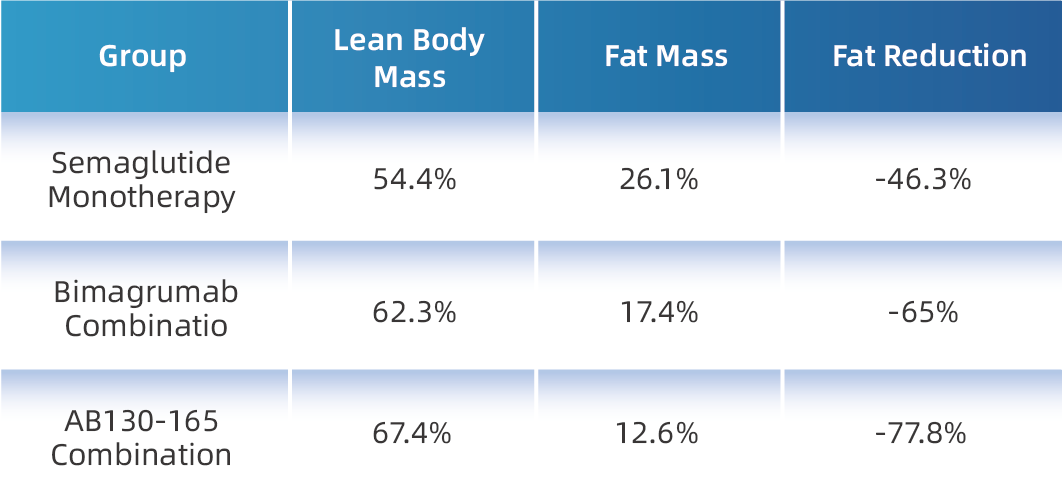
Semaglutide monotherapy resulted in a 15.1% reduction in lean body mass, compared with only 9.3% in the AB130-165 combination group. The combination also substantially reduced fat deposits in the inguinal, epididymal, and mesenteric regions.
These findings suggest the potential of combining ActRII pathway inhibition with GLP-1 therapy to improve body composition during weight loss.
3. Improved lipid profiles
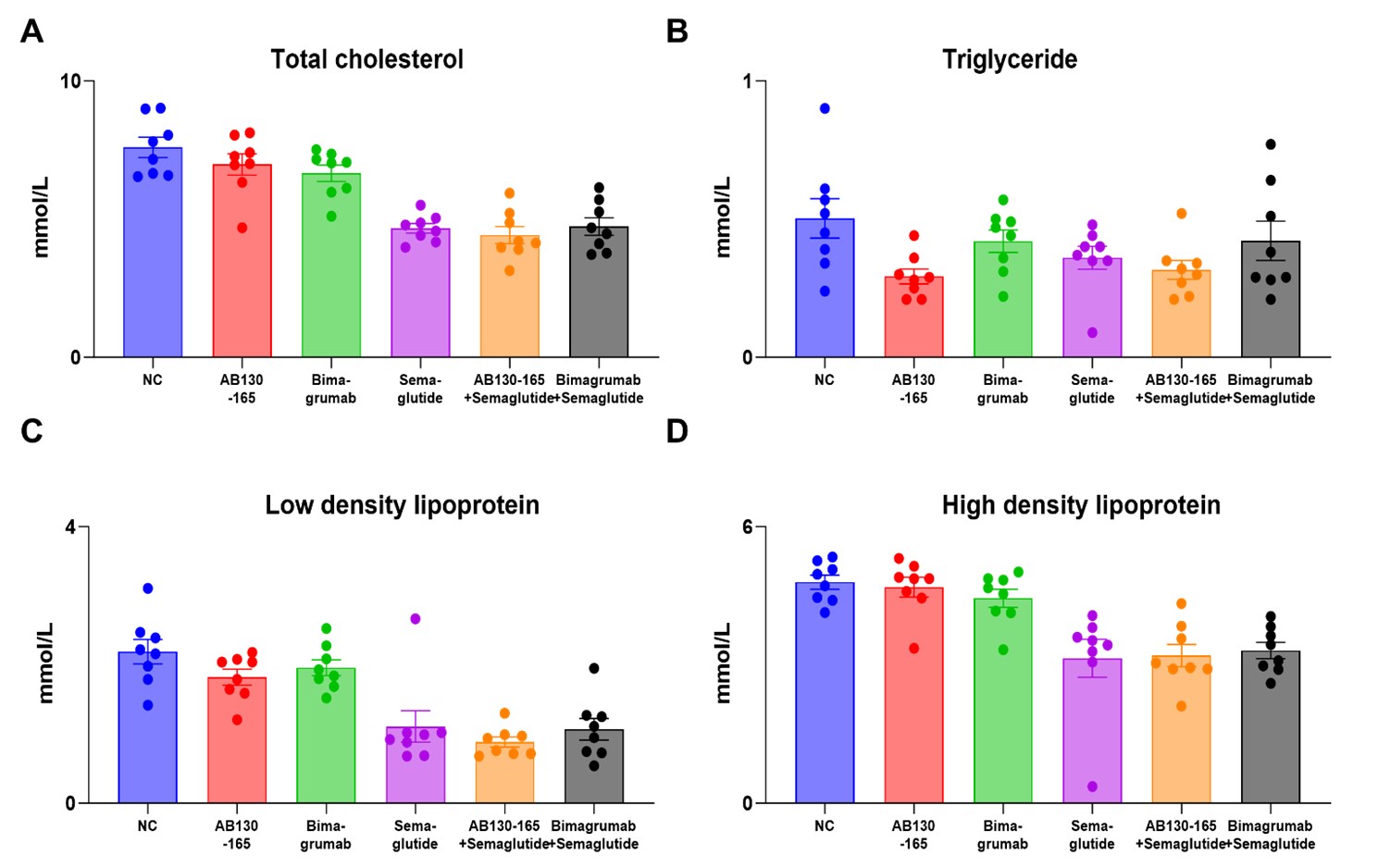
The AB130-165 combination produced greater reductions in cholesterol, triglycerides, and low-density lipoprotein (LDL) than the Bimagrumab combination, suggesting potential additional benefits for cardiometabolic health that warrant further investigation.
Comparison of lipid parameters across treatment groups
The Differentiated Value of AlfaDAX in ActRII Antibody Development
1. A function-first development strategy
Prioritizes cellular function as the primary optimization objective, helping avoid unnecessary engineering for ultrahigh binding affinity that does not translate into greater functional potency.
2. Simultaneous multi-objective optimization
Integrates predictions of functional efficacy, binding affinity, and CMC-related risks within a unified AI workflow, substantially reducing experimental workload and shortening development timelines by more than 50%.
3. Early identification of developability risks
Predicts potential liabilities involving aggregation, viscosity, and immunogenicity at an early stage, helping reduce the risk and cost of preclinical CMC rework.
4. Broad applicability across challenging therapeutic targets and modalities
AlfaDAX has supported the identification of preclinical candidate (PCC) molecules against two challenging metabolic targets, GIPR and ActRII. The platform is also compatible with multiple molecular modalities, including monoclonal antibodies, fusion proteins, and antibody-conjugated molecules.
Accelerating the Next Generation of Weight-Loss Therapies
Powered by AlfaDAX, the collaborative AB130-165 program has demonstrated superior preclinical efficacy compared with Bimagrumab, the clinical benchmark, providing a promising candidate for next-generation combination therapies designed to promote fat loss while preserving muscle.
Looking ahead, Great Bay Bio will continue to integrate its two AI-powered platforms, AlfaBodY and AlfaDAX, to accelerate the development of innovative metabolic antibodies that combine potent biological activity, favorable developability, and global intellectual property potential.
Through collaboration with pharmaceutical innovators worldwide, Great Bay Bio aims to help advance the next generation of high-quality weight-loss therapies designed to deliver fat loss without muscle loss.