

2026-09-15
From predicting a molecule to designing a therapeutic candidate, the fundamental logic behind antibody discovery has remained largely unchanged for decades.
Whether through hybridoma technology, phage display, or single B-cell screening, the core question has always been the same: How can we identify the right antibody from an enormous molecular space?
Over the past several decades, antibody discovery has continuously moved toward greater scale. Researchers have built larger antibody libraries, higher-throughput screening systems, and increasingly sophisticated experimental platforms. From screening thousands of hybridoma-derived antibodies to exploring billions of sequences through display technologies, the underlying strategy has remained consistent: expand the search space to increase the probability of finding high-quality candidates.
However, the theoretical sequence space of antibodies is virtually unlimited, while only an extremely small fraction of possible molecules can realistically be synthesized, expressed, and experimentally validated.
The true bottleneck in antibody discovery may never have been how many sequences we can generate, but rather whether we can determine which sequences are truly worth creating.
AI is beginning to change this paradigm.
At Great Bay Bio, we aim to take this transformation one step further.
What if AI could not only predict antibody properties, but also understand which molecules have a higher probability of becoming successful therapeutics?
This question represents the foundation of Great Bay Bio’s AI-driven biologics discovery platform.
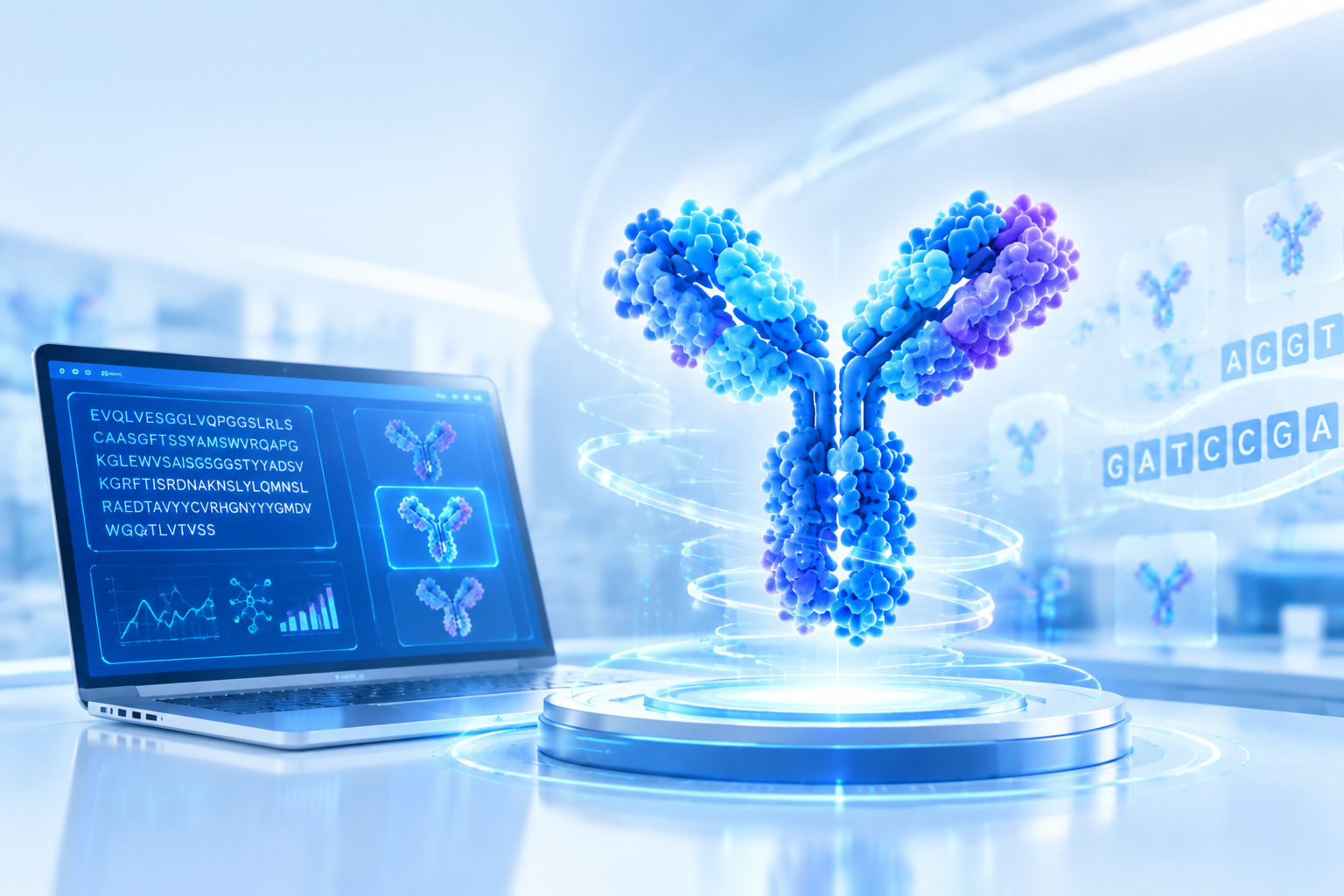
Traditional antibody discovery follows a “generate first, screen later” paradigm.
Large numbers of candidate molecules are generated, followed by extensive experimental screening, validation, and elimination processes until promising candidates gradually emerge.
This approach has powered the development of the antibody therapeutics industry and established a mature discovery ecosystem.
Because a larger library does not necessarily guarantee a better answer, and more experiments do not always translate into faster discovery.
The value of AI is not simply accelerating existing workflows. More importantly, AI is beginning to reshape the way molecular exploration itself is performed.
Great Bay Bio is developing a new paradigm for antibody discovery:
Target biology understanding → Molecular design hypothesis → AI-driven design → Experimental validation → Biological feedback → Next-generation optimization
Within this framework, AI is no longer merely a predictive tool positioned at the end of the research workflow. Instead, it becomes an active participant at the beginning of molecular creation.
However, the true value of this ecosystem does not come from a single model or a specific algorithm. It comes from the integrated system behind these technologies.
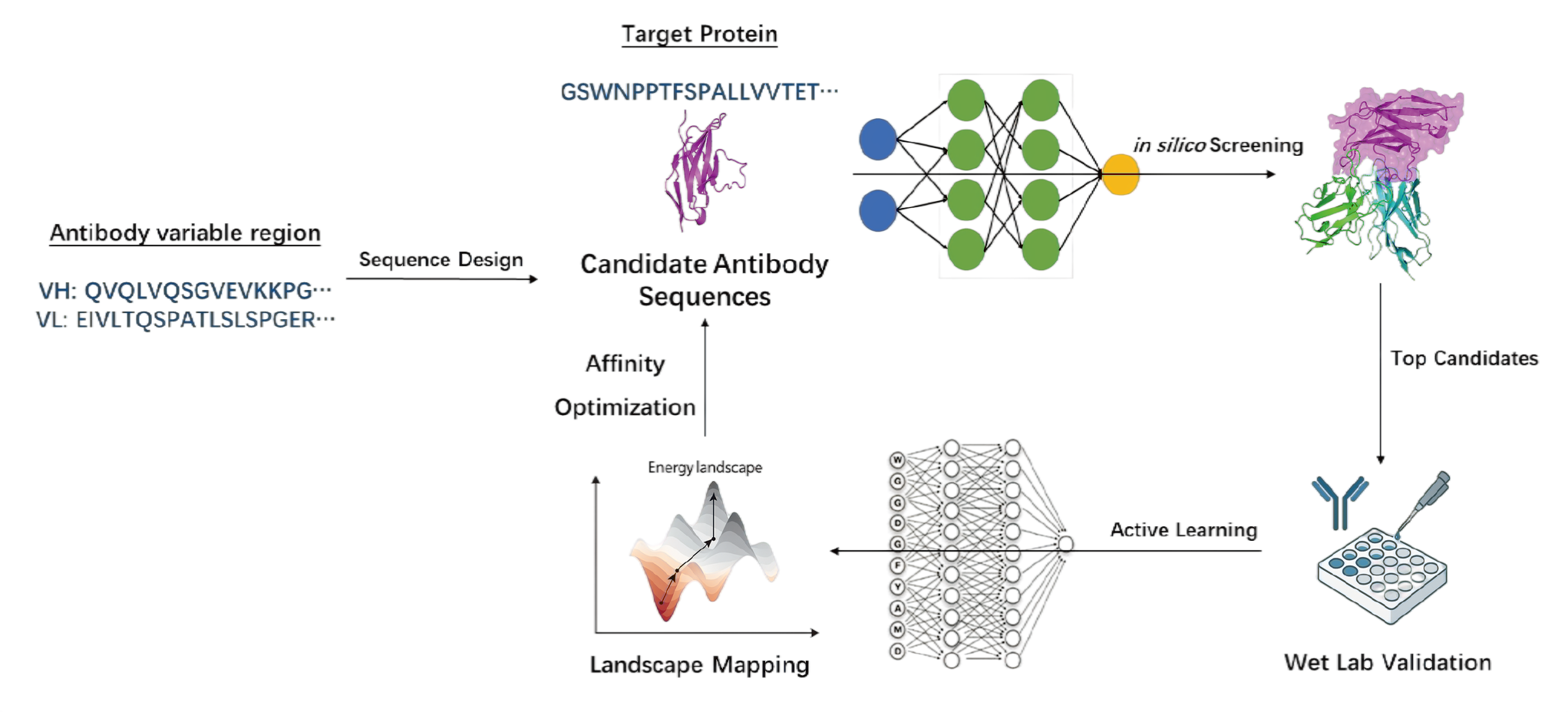
▲ AlfaBodY platform focuses on intelligent antibody design from 0 to 1, leveraging AI algorithms to explore antibody sequences with higher developmental potential.
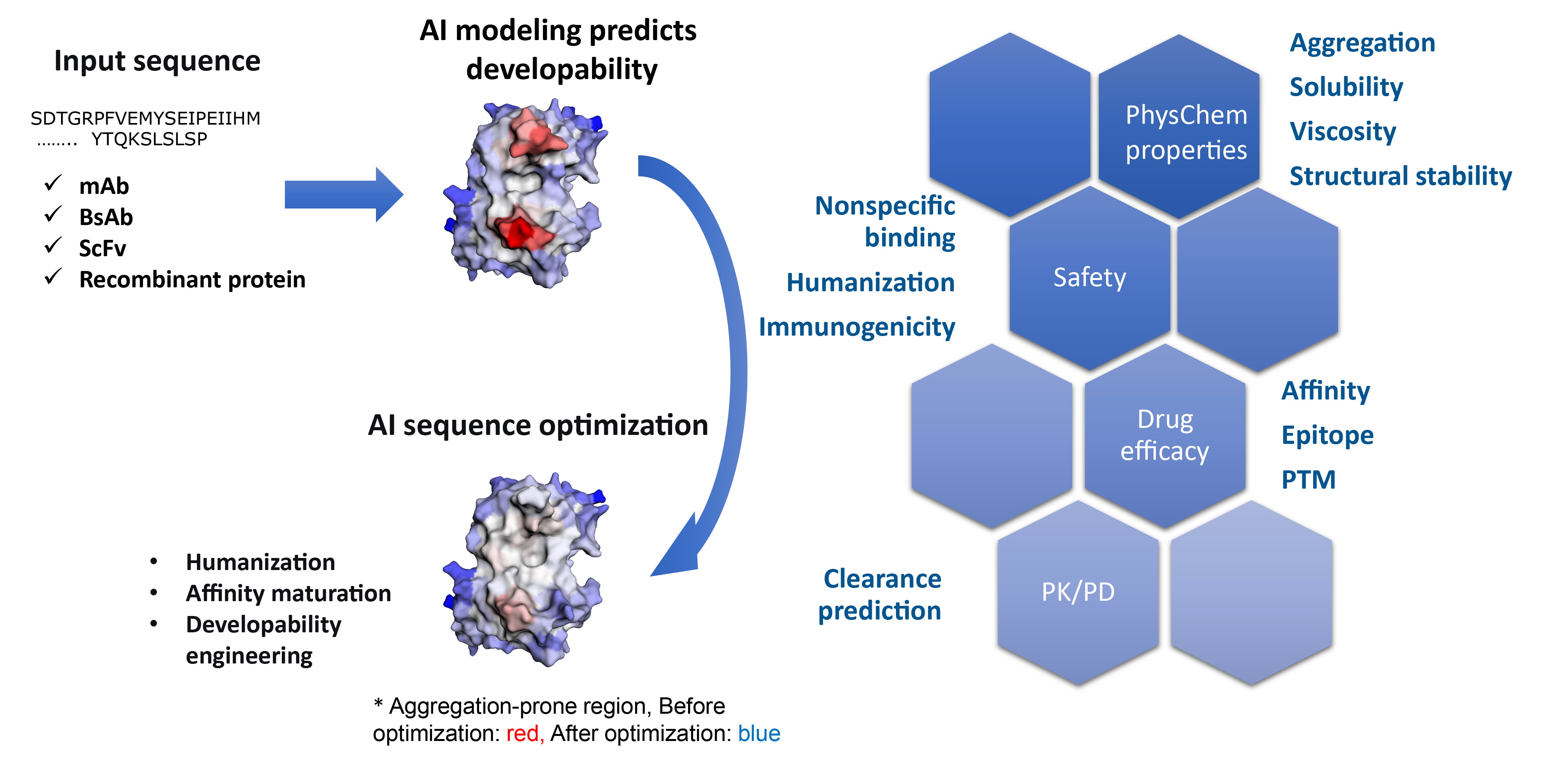
▲ AlfaDAX platform enables antibody molecular optimization by evaluating multiple dimensions, including affinity, humanization, and developability.
2. Biology-native AI: More Than a Model, A Complete System
Today, AI can generate protein sequences, predict structures, and analyze molecular properties.
This naturally raises a fundamental question:
At Great Bay Bio, we believe the answer is more complex.
Biologics development has never been a single-variable optimization problem.
A truly developable antibody must simultaneously satisfy multiple interconnected—and sometimes competing—requirements, including:
- developability potential.
A molecule that appears “optimal” in one dimension may completely lose its potential as a therapeutic candidate because of limitations in another.
Therefore, Great Bay Bio does not aim to build a single “super model” that solves every biological challenge.
Instead, we are developing a specialized AI engine ecosystem built around real biological principles.
Different algorithmic capabilities are designed for different biological questions. These capabilities are continuously validated through real-world projects, while knowledge generated from different tasks accumulates within a unified platform.
We refer to this approach as Biology-native AI.
Over the past decade, artificial intelligence has been shaped by a highly influential paradigm:
More data + larger models + greater computational power = stronger AI capabilities
However, whether biologics discovery follows exactly the same scaling principles remains an open question.
The reason is that in biology, a data point validated through real experiments does not carry the same value as an unverified data point.
A single experimentally validated result that changes molecular design decisions may provide more meaningful information than thousands of ordinary sequences.
Public databases today contain enormous amounts of protein sequence and structural information. However, for therapeutic design, the most important questions are often not:
“What does this protein look like?”
but rather:
“Why does a specific sequence change improve activity?”
“Why do two antibodies with similar affinity show completely different developability profiles?”
“Why does a molecule that appears promising computationally fail during experimental validation?”
The answers to these questions often come from datasets that are not necessarily large.
They may consist of only dozens of sequences, several mutations, a single expression result, or one failed experiment.
Yet these datasets possess another critical attribute:
High Information Density.
Therefore, Great Bay Bio focuses not only on large-scale data, but also on high-quality, high-value biological data.
These data are generated from real development processes, with defined experimental conditions, molecular backgrounds, and biological outcomes.
More importantly, they teach AI what works, what does not work, and why.
This may ultimately be more valuable than simply increasing data volume.
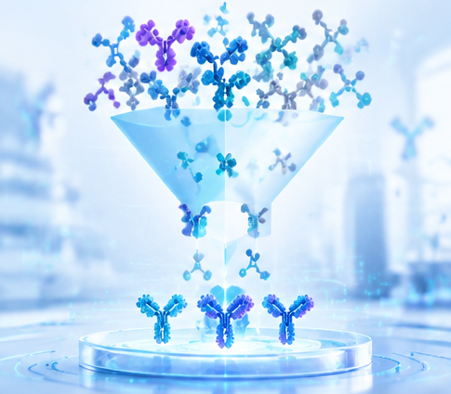
In traditional research workflows, an experiment usually serves a single purpose: determining whether a molecule is worth further development.
In an AI-driven research system, Great Bay Bio aims for every experiment to generate at least two types of value:
The first is evaluating the molecule.
The second is enabling the system to learn.
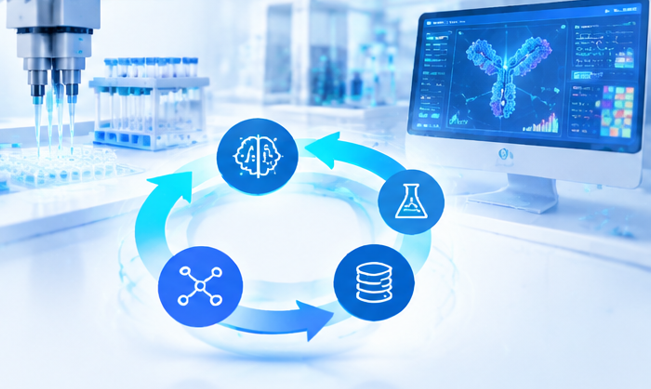
Great Bay Bio integrates computational design and experimental validation into a continuous learning loop:
AI design → Focused experimental validation → Biological feedback → Active learning → Next-generation design
AI proposes hypotheses.
Experiments validate those hypotheses.
The resulting biological feedback then reshapes the molecular search space for the next design cycle.
The conclusion of one project may become the starting point for another.
At Great Bay Bio, we increasingly view AI not as an independent software tool, but as a continuously evolving design engine.
A truly valuable AI system does not replace experiments.
Instead, it ensures that every experiment contributes to improving future design capabilities.
AI-generated protein sequences are becoming increasingly accessible.
In the future, generating millions or even hundreds of millions of sequences may no longer be the major challenge.
However, this does not automatically mean drug discovery will become faster.
The fundamental question remains:
Which molecules are truly worth bringing into experimental validation?
If AI generates one million sequences but still requires extensive experiments to screen them individually, AI may only change the way sequences are created, without fundamentally improving development efficiency.
The real value of AI lies not in expanding experimental scale indefinitely, but in improving the quality of candidate selection before experiments begin.
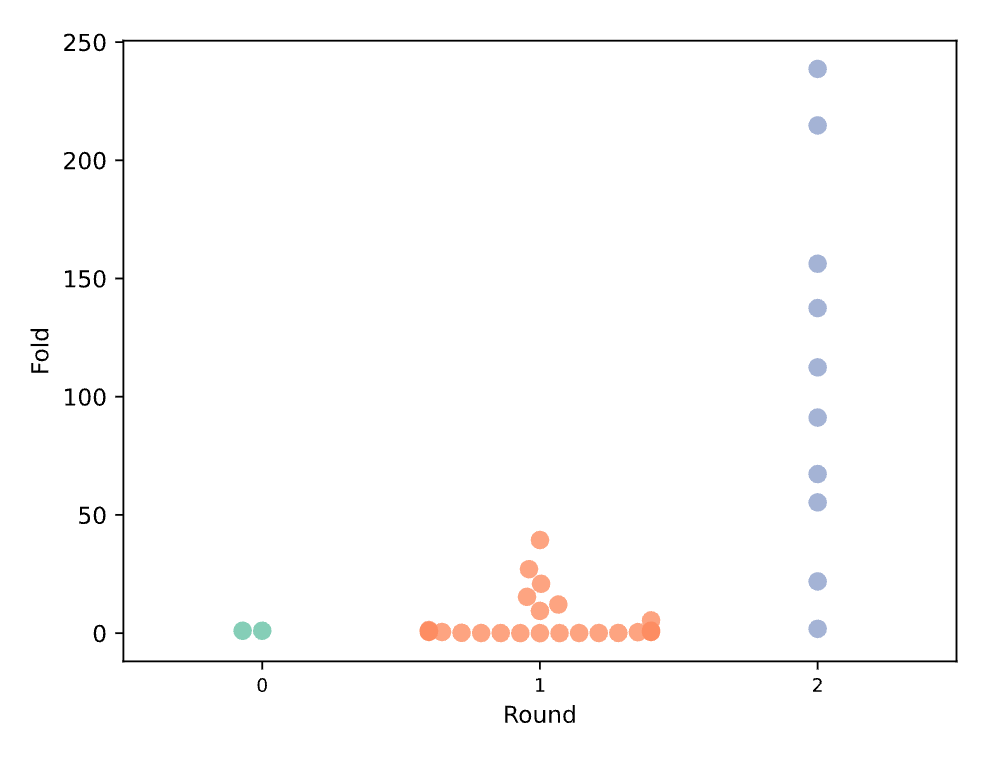
A Nature publication, “The Virtual Lab of AI agents designs new SARS-CoV-2 nanobodies,” reported that in an AI Agent-driven antibody design workflow, computational pipeline execution typically required approximately one
week, followed by more than six weeks of wet-lab validation and further data analysis and iteration.
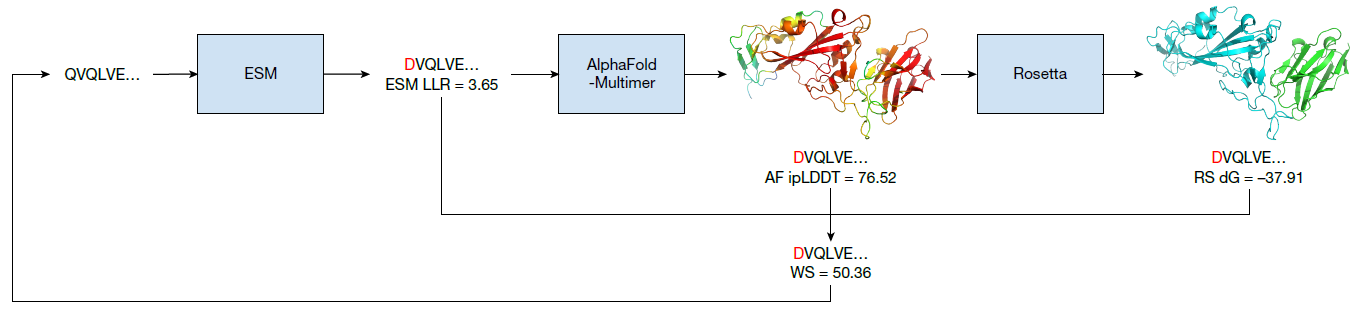
Within Great Bay Bio’s AI-driven research system, automated pipelines can optimize the computational workflow to approximately two days. Combined with intelligent experimental capabilities, the subsequent wet-lab validation cycle can be further reduced to approximately two weeks, enabling an overall efficiency improvement from:
1 week + 6 weeks → 2 days + 2 weeks
Instead, AI helps researchers make better decisions before experiments begin:
- which development paths deserve investment.
Great Bay Bio is not focused on generating the largest number of sequences.
We focus on identifying fewer but more valuable candidates for experimental validation.
This represents a fundamentally different approach.
Through AlfaBodY, Great Bay Bio integrates target information, molecular characteristics, existing biological knowledge, and historical experimental feedback into a more focused molecular design space.
AI does not simply generate more candidates.
Instead, it continuously narrows the enormous theoretical search space toward molecules with higher probability of success.
Ultimately, our goal is:
Fewer candidates.
Higher information density.
Better development decisions.
This may represent the true significance of AI in antibody discovery.
6. The Best Antibody Is Not the Champion of a Single Metric
Antibody engineering has long faced another fundamental challenge: single-objective optimization.
Improving affinity, enhancing activity, reducing aggregation, lowering viscosity, and improving expression have traditionally been addressed as separate optimization goals.
However, a therapeutic molecule is not simply the sum of individual parameters.
A mutation may improve affinity while reducing stability.
Another mutation may enhance expression while compromising biological activity.
True molecular design is fundamentally a complex multi-objective optimization problem.
Therefore, AlfaDAX does not focus on making one single property of an antibody the best.
Instead, it seeks the optimal combination of molecular characteristics that creates the highest probability of becoming a successful therapeutic candidate.
When affinity, activity, stability, aggregation, viscosity, expression, and other critical properties are considered within a unified design space, AI is no longer searching for the maximum value of a single parameter.
Instead, it is exploring Pareto-optimal solutions within a complex molecular landscape.
In other words:
We are not optimizing one parameter.
Once a model is trained, its capabilities are largely determined.
However, a truly valuable platform should not remain static.
When a new antibody project enters the system, it generates new designs.
Those designs enter experimental validation.
Experiments generate new biological feedback.
The feedback improves the model.
The improved model influences the next generation of designs.
This creates a continuous cycle:
Better Data → More Advanced Algorithms → Better Molecules → More Biological Validation → Better Data
At Great Bay Bio, we refer to this process as:
AI Capability Compounding.
The true value is not simply whether a single prediction improves by a certain percentage.
The more important question is whether, after dozens or hundreds of real-world development projects enter the same system, the platform can continuously deepen its understanding of the relationships between:
Sequence → Structure → Function → Developability
If the answer is yes, what the AI platform accumulates is not merely data.
It accumulates an increasingly difficult-to-replicate capability:
intelligent biological design.
This is also what differentiates AI-driven biologics development platforms from traditional computational tools.
A tool solves an individual problem.
8. The Scaling Law of AI for Biologics
In the field of artificial intelligence, scaling laws suggest that model capabilities can continue to improve as data, model parameters, and computational resources increase.
However, does biologics discovery follow exactly the same trajectory?
We believe this question deserves further exploration.
Because in biology, an experimentally validated data point and an unverified data point do not have the same information value.
A single piece of data that changes molecular design decisions may be more valuable than thousands of ordinary sequences.
Great Bay Bio is exploring another possibility:
The future capability of biological AI may depend not only on how much data a model has seen, but also on how many experimentally validated biological principles it has learned from.
This suggests that the true scaling law for Biology-native AI may not simply be:
More Data × Larger Models × More Compute
Instead, it may come from:
Better Data × Specialized Algorithms × Experimental Validation × Continuous Learning
This is not a finalized formula.
It is a direction that Great Bay Bio is actively exploring and validating through real-world research environments.
The future development of AI for biologics may not simply follow the traditional AI trajectory of “bigger models and larger datasets.”
9. From Predicting Biology to Engineering Biologics
Since AI entered the life sciences, the field has experienced several stages of evolution.
At first, we hoped AI could help us analyze biological data.
Then, we sought to use AI to predict biological behavior.
Later, generative AI began exploring the creation of new molecular designs.
For Great Bay Bio, the next major step is even more transformative:
engineering biologics through AI.
This means enabling AI to become deeply integrated into the biologics development ecosystem—not existing as an isolated computational capability, but connecting molecular discovery, antibody engineering, experimental validation, and downstream CMC development.
From antibody sequence design through AlfaBodY, to multi-objective molecular optimization through AlfaDAX, and continuous learning from real experimental feedback, Great Bay Bio is building more than an individual AI model.
We are developing an AI-driven biologics discovery and engineering platform that continuously evolves.
We do not yet know where AI will ultimately take biologics development.
But one thing is becoming increasingly clear:
The future leaders in AI-driven drug discovery may not simply be determined by who owns the largest model.
They may be determined by who can learn the fastest from biology.
When every molecular design generates new experimental knowledge,
when every experiment improves the next design cycle,
and when data, algorithms, and biology form a continuous feedback loop,
AI will no longer simply predict what biology might do.
It may begin to engineer what biology can become.
Building the Future of AI-Driven Biologics Development
By deeply integrating AI with antibody discovery, molecular optimization, experimental validation, and CMC development, Great Bay Bio is committed to improving candidate success rates, reducing development costs, and accelerating the advancement of innovative biologics.
Through autonomous protein design and intelligent R&D systems, Great Bay Bio is pioneering a new paradigm for the future of biologics discovery.
Accelerating Breakthroughs: How Rapid Cell Line Development Reshapes the Industrial and Commercial Pace of Biopharmaceuticals
2026-05-21

High Stability Enables Industrialized, Compliant, and Sustainable Commercial Production of Cell Lines
2026-04-09

Cell Line Development: Why Stability Is an Unavoidable Core Threshold
2026-04-03

